At Commonweal yesterday (Friday 23rd August), the staunchly conservative, Catholic writer Joseph Bottum published a “personal essay”, under the heading “The things we share: A Catholic Case for Same - sex Marriage“, which has already drawn extensive commentary (at the New York Times, and elsewhere). I am certain it will draw a great deal more, in the days ahead.
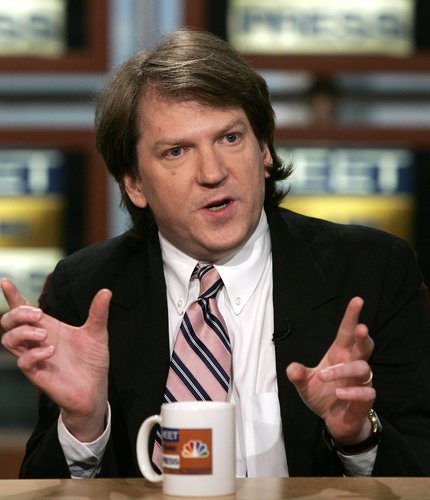
Joseph Bottum
It’s long, but well written and definitely worth reading and thinking about. I’m not convinced though that the headline is appropriate: it’s not so much a Catholic case for equal marriage, as an account of the writer’s own personal evolution on the topic. He begins, for instance, with an account of how the issue led to the breakdown of a close friendship with another conservative friend, who is gay, and for whom Catholic hostility to people like himself led him in time to reciprocal hostility to the Catholic Church, and to vote Democrat in spite of his deep - seated Republican sympathies on small government and fiscal issues. But he then, referring to Republican Senator Rob Portman’s change of heart, he continues by rejecting family and friendship ties as reasons to embrace gay marriage.
Similarly, he notes that it would be politically expedient for the Catholic Church to back off its very public opposition, simply because the political fact of extensive and growing support for what he sees as the inevitability of marriage equality. But he says, expedience is not the appropriate rationale for Catholics, on the things that matter. If opposition is the morally right thing to do, then Catholics should never give up their opposition.
And so he continues, describing and rejecting several widely promoted reasons for withdrawing opposition to same - sex marriage, before finally getting to the nub of his argument, which he anticipates, after a lengthy preamble, with this summary (my emphasis, added):.
I DON’T MEAN to hide this essay’s conclusions. Where we’re going with all this is toward a claim that the thin notions of natural law deployed against same-sex marriage in recent times are unpersuasive, and, what’s more, they deserve to be unpersuasive—for their thinness reflects their lack of rich truth about the spiritual meanings present in this created world. Indeed, once the sexual revolution brought the Enlightenment to sex, demythologizing and disenchanting the Western understanding of sexual intercourse, the legal principles of equality and fairness were bound to win, as they have over the last decade: the only principles the culture has left with which to discuss topics such as marriage.
And so, I argue, a concern about the government’s recognizing of same-sex marriage ought to come low on the list of priorities as the church pursues the evangelizing of the culture. For that matter, after the long hard work of restoring cultural sensitivity to the metaphysical meanings reflected in all of reality, Catholics will have enough experience to decide what measure of the deep spirituality of nuptials, almost absent in present culture, can reside in same-sex unions.
- See more at:Commonweal
I’m not going to attempt any summary of his actual case. He notes in his own summary (above) that arguments based on natural law theory are unpersuasive. That’s not because he’s opposed to natural law theory itself. He’s a devoted admirer of Thomas Aquinas (whom he refers to on first name terms, simply as “Thomas”). Rather, his concern is that the unpersuasive arguments usually voiced are based on what he dismisses as “thin” natural law. He prefers the real thing, which he describes as the thick natural law of Aquinas himself. Using thick natural law, he develops his argument.
I’m not personally well - versed in natural law of either variety, skim - milk or full cream, so I leave you to read the subtleties for yourself. What most interests me, is his description of how his thinking gradually evolved, from outright opposition, as a signatory and publisher of the infamous “Manhattan Declaration”, to his now clear support - not in spite of his conservative Catholicism, but because of it.
A key point came during discussions around the final draft of the The Manhattan Declaration: A Call of Christian Conscience, which Bottum descirbes as
a manifesto issued in November 2009 that equated abortion, same-sex marriage, and intolerance of religion, and vowed to oppose any mainstream consensus that licensed them. Dozens of important religious figures met with Chuck Colson in New York to become the initial signers, and The Manhattan Declaration would go on to find half a million additional signatories.
During the deliberations of the drafting team, Bottum expressed his reservations.
Finally, at the New York meeting, I got up and announced publicly my unease: The equating of these three concerns is a mistake; not only do the possible negative results of same-sex marriage fail to match the horrors of abortion, but religious freedom isn’t even the same kind of thing. ……..
And in response, Maggie Gallagher stood up in that crowded room to call me a coward—or, at least, she declared that any reduction in the status of the fight over same-sex marriage was a counsel of cowardice, born from a fear that same-sex marriage was inevitable. A writer and activist, former president of the National Organization for Marriage, Gallagher has always struck me as a fearless and contrarian figure, and in this case, I think, she was correct.
But, here’s the critically important point. She was correct, Bottum says, in her accusation of his cowardice. That cowardice though, was not in his unwillingness to stand up and fearlessly oppose gay marriage - but for his cowardice in previously failing to critically think through the issues.
My worry with The Manhattan Declaration wasn’t about the consequences of defeat, as Gallagher suggested; if something is wrong, you oppose it even though the heavens fall. But cowardice about my own mind, yes: my profamily friends were a strong public-intellectual force opposed to abortion, and I went along with them on same-sex marriage mostly because I lacked the seriousness and strength of mind to work through it for myself.
In spite of his misgivings, he went ahead and signed the declaration in it’s final form - and published it. But thereafter, he grasped the nettle, and engaged his mind in grappling fully with the issues, and with his love of Aquinas’ “thick” Natural Law Theory. That process led him, in time to accept the theological, spiritual value of same - sex marriage.
In this, he is just one more example of a widespread pattern, of political conservatives and religious leaders who were once opposed to gay marriage, but changed their minds after grappling seriously with the subject. In the preamble to his main argument, Bottum dismisses Senator Portman’s conversion, saying that simple family ties are not sufficient reason to change moral convictions. But Portman’s change of heart did not come simply because his son was gay. It came instead, because by meeting with his son’s gay and lesbian friends and their families, he was able to observe and think deeply about the reality of their lives and values. By so engaging with this reality, he concluded that his earlier views had bee based on false perceptions and stereotypes Bottum also refers directly to David Blankenhorn, the conservative writer and activist for “traditional marriage”, who was called as an expert witness to defend Proposition 8 in the California trial. But the judge found his evidence so lacking in any solid foundation in fact, that he described it as an argument that supported gay marriage. Forced to consider his own evidence, Blankenhorn himself later agreed, and became an advocate in favour of equality, reversing his previous position.
Much the same pattern has been seen in the churches, Catholic and Protestant. There have been numerous examples of Protestant pastors who have changed their views after engaging with gay or lesbian couples in their own congregations, and in doing so have discovered to their surprise, that their loves and values were very similar to their own marriages. There have been many fair - minded religious men and women, lay people and biblical scholars alike, who have turned to serious Bible study to support their opposition to same - sex relationships, and found instead that serious study and engagement led them to exactly the opposite conclusion. There have been Catholic bishops, whose strenuous opposition to full marriage equality has led them to think deeply about gay relationships and the principle of legal recognition and protection - and led some to endorse at least civil unions - sometimes simply as the lesser of two evils, but sometimes even for their inherent value.
Joseph Bottum is not alone , as a Catholic who is evolving on gay marriage. So are most American Catholics (more rapidly than any other religious group), Catholics in Europe and Latin America, and the global Christian community as a whole - far more rapidly than most people have recognized. A month or so ago, I began what should have been a series on how “The arc of history is bending” towards gay marriage, fully intending to include in the series, a post on this transition even in the Christian Churches. But then Pope Francis’ remarkable words on gay and lesbian inclusion in church (itself an important illustration of the pattern), interrupted, demanding a large share of my time, and that instalment was not written. It remains important though, and I will shortly return to it, with a full exposition of how the arc of history is bending towards gay marriage - even in church.
“
Related articles
- Daniel Helminiak on the Vatican’s Natural Law Mistake (thewildreed.blogspot.com)
- Just When You Think You’ve Seen Everything . . . (nationalreview.com)
- Commonweal Admits Defeat re: Marriage Equality, Commonweal Hears an Earful in Response (bilgrimage.blogspot.com)
- Now on our homepage: Joseph Bottum on the case for same-sex marriage (commonwealmagazine.org)
- Beyond Respectful Tolerance to Celebratory Acceptance (thewildreed.blogspot.com)
- Catholics Support Gay Marriage - in Virginia (news.queerchurch.com)
- A Catholic case for same-sex marriage (news.queerchurch.com)
- The Latest Conservative Defector On Same-Sex Marriage (dish.andrewsullivan.com)


4 comments for “A Conservative Catholic Evolution on Gay Marriage”