In a response to the finding of the recent report by the Guttmacher Institute that Catholic women are as likely as any others to support the use of contraception, Deirdre McQuade, assistant director for policy and communications at the U.S. Conference of Catholic Bishops’ Secretariat of Pro-Life Activities, accused the Institute of presenting its results in a misleading manner. Without reading the Institute’s full report, I cannot comment on her allegation - but I can say that her own presentation is most clearly misleading. For instance, she claims that “We are not alone” in opposing taxpayer funding of contraception, but this is a red herring, totally irrelevant to the findings of the report, and furthermore she provides absolutely no supporting evidence for her claim.
McQuade alleges that the report lacks subtlety of approach, in considering how people come to understand their bodies:
“Right from the start they are painting a discouraging picture, but netting everyone is not particularly helpful information,” she added. “The report captures none of that intricacy of people coming to understand how their body works and how their future can be authentically planned” through natural family planning.
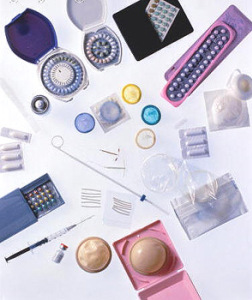
This is rich - it is the orthodox Vatican doctrine that really fails to see how people with real sexual experience understand their bodies, and furthermore ignores the history of how the disordered teaching was foisted on an unwilling Catholic Church, which has patently refused to accept the doctrine.
Writing at Bilgrimage about McQuade’s statement, Bill Lindsey makes many important points about the internal contradictions in opposing both contraception and abortion, and also refers to an article at NCR Online about the Papal commission on birth control, and Vatican interventions to ignore the evidence and the majority report, to impose instead the personal views of Pope Paul VI and Cardinal Ottaviani. This too is worth reading in full: the main story is reasonably familiar from other sources, but it is good to have it available on-line, and there are some useful new details. I want to deal here with only one aspect - the importance of precisely the people who have come to ” understand how their body works”. The original commission included only six people, and no married couples. Then
The German Jesuit Josef Fuchs was added for the second meeting and Patty Crowley and her husband, Patrick, came in for the fourth meeting. The Crowleys were active in the Catholic Family Movement. The CFM was a worldwide married Catholic couples group that then advocated the “rhythm method” for birth regulation……By the time the commission delivered its final report the commission contained 15 bishops and cardinals, with all the other members reduced to the level of periti.
When the commission began in 1963, many of the original members were opposed to any change in Casti Conubii’s prohibition of birth control. Over time, this changed.
Especially important in changing commission members’ minds was an important survey Patty and Patrick Crowley did of the CFM members. The CFM members in large numbers reported movingly how the rhythm method did not work for them and how it was inhibiting intimacy and hurting their marriages.
These survey results would likely only have surprised clerics who had never been in a long-term, public, monogamous heterosexual relationship.
Eventually, the original commission members became substantially in favor of recommending changing the Vatican’s policy, thereby permitting birth control.
Note the crucial impact of the reality-based evidence, taken from a survey of CFM members (loyal Catholics, actively promoting the rhythm method). Their experience led them to recommend a change in teaching, and and considering the the evidence of that experience in turn led the others also to change their views - including all fifteen of the bishops and cardinals.
This, in microcosm, is what has played out in the broader church over the forty years that have followed the publication of Humanae Vitae. Ordinary Catholics, especially those with real-life experience of committed and faithful heterosexual relationships and the hardship and pain caused by the failures of the standard teaching, rejected the teaching. Those priests in direct pastoral work, who were in a position to listen to their stories, understood and sympathised with them, and encouraged them to balance the harshness of HV with the important teachings on conscience. (I have seen no figures, but I suspect that this is the majority position of parish priests today). In time, many bishops, those with prior pastoral experience themselves, or who take the trouble to listen to their priests, have also come (in private) to accept the possibility of conscientious dissent on contraception. We also know that a substantial proportion, possibly a majority, of Catholic moral theologians want to see a revision to the teaching.
Daphne McQuaid, in her response to the Guttmacher Institute, claims that we “as Catholics” oppose taxpayer funding of contraception. But which Catholics is she speaking for? Who really does still support the teaching of Humane Vitae? We know it’s not the married couples. What about the clergy? Writing about abortion at Commonweal, John McGreevy has an aside on contraception:
By the mid-1960s, the overwhelming majority of Catholic couples, priests (as evidenced in Leslie Tentler’s fine study) and, perhaps, even bishops, were either ignoring Church teaching on contraception or fervently hoping that this teaching would change. When it did not, Catholic couples resolved to simply ignore church teaching, as they do today, over forty years and innumerable episcopal statements later. Many of today’s more conservative priests and seminarians claim to fully endorse church teaching on contraception. But theirs is an easy orthodoxy unavailable to priests fifty years ago, forced to grapple with the issue on a less abstract plane, as they listened to endless anguished couples discussing dilemmas of contraception, sex and family in the confessional.
- Clearly, it is not the majority of ordinary Catholics with experience of sexual relationships, who overwhelmingly use contraception.
- It is (probably) not supported by any strong majority of priests engaged in pastoral experience with married couples.
- It is not supported by any clear majority of Catholic theologians, who have considered the evidence and arguments in any depth.h
- It does not have the unanimous support of Catholic bishops.
Where, in short, is there any evidence that HV has been “received” and accepted by the church as a whole - a vital condition for it to be accepted as valid Catholic teaching?
As far as I can tell, it supported primarily by those bishops whose concerns are with maintaining “discipline” in the church - or more bluntly, maintaining the episcopal grip on power. HV is based on a single assertion, that all genital sex must be open to the creation of new life. Reject that for married couples, and the traditional teachings on masturbation, sex before marriage, and homoerotic relationships (all of which are likewise rejected by Catholics with real-life sexual experience) also fall apart.
Once we recognise that the Vatican has been wrong on almost the whole range of sexual teaching, claims of Vatican authority and papal infallibility must inevitably also come into question. No wonder the CDF is terrified of admitting the obvious - that they have made a mistake.
The great irony here is that Pope Paul did not want to amend the teaching in the first place because he did not want to discredit the Church’s teaching authority. By resisting the inevitable, he has simply brought the whole sorry edifice into even greater disrepute.
Related articles
- U.S. Bishops’ Pro-Life Spokeswoman: Catholics Oppose Taxpayer Funding of Contraception (bilgrimage.blogspot.com)
- Now We Learn Humanae Vitae Was Not About Life, It Was About Papal Authority (enlightenedcatholicism-colkoch.blogspot.com)

