South Africa’s Chief Justice, Mogoeng Mogoeng, last week spoke of the value of religion in the public sphere, and added that in his view, the law should prohibit divorce and adultery. This led to some worried speculation by gay activists that he was also flying a kite for legal restrictions on gay rights. However, he has strongly denied suggestions that his Christian views would override his commitment to protecting gay rights, as required by the constitution.
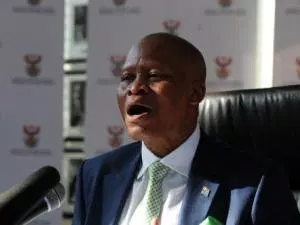
Mogoeng vows to protect gay rights
Chief Justice Mogoeng Mogoeng on Wednesday vowed to protect all citizens’ rights, including the rights of homosexuals.
“I know as a Christian that the Bible speaks against homosexuality, but I have taken an oath and I am very serious about my oath,” he told reporters in Johannesburg.
“It cannot be a lie when I assure the nation that I will uphold the Constitution, the laws and the human rights.”
Mogoeng pointed out the right to sexual orientation was a human right and it would be perverse of him not to accept that.
“Justice is not supposed to be perverted, to begin to get at those who are gay and lesbian just because of their choice.
“My responsibility is to ensure that every gay person, every lesbian person enjoys their right as protected by the bill of rights. There’s no question about that,” he said.
Mogoeng, who is a lay minister, has been criticised for his strong religious views.
He was defending a speech he gave in Stellenbosch last week about religion and the law. Mogoeng caused a stir by suggesting religion could be used to strengthen legislation and lead to a better society.
The chief justice said he would not allow his faith to take precedence over the Constitution.
via IOL.co.za.
This assurance is welcome. Although South Africa has strong constitutional protections in its bill of rights against discrimination on the grounds of sexual orientation, and was the first in the word to provide these, the situation on the ground is less admirable. Public prejudice is widespread, and violence against gay men and lesbians is common - even extending to what is euphemistically known as “corrective rape” of lesbians (and occasionally men), which sometimes leads to death.
From time to time, calls are made to remove the gay protections from the constitution, so every expression of support for these protections, from government, other politicians, and the judiciary, helps to further entrench them and push back a further remove any prospect of their disappearance.
Related articles
- Mogoeng: Why law, religion should mix (iol.co.za)
- ‘Law must frown on divorce, adultery’ (iol.co.za)
- The Biblical Case for Gay Marriage (queeringthechurch.com)
- ‘The Third Way’: A Depressing Study in Catholic, Ex-Gay Propaganda. (queeringthechurch.com)
- Gays for Jesus: Catholic and Evangelical (queeringthechurch.com)
- Catholic LGBT Ministry, Johannesburg (queeringthechurch.com)
- Uganda Martyrs raise questions on homosexuality, religion and LGBT rights (jesusinlove.blogspot.com)
- The Tragic Double Meaning for “Ugandan Martyrs” (queeringthechurch.com)
- Anglican reactions to Nigerian and Ugandan legislation (thinkinganglicans.org.uk)

